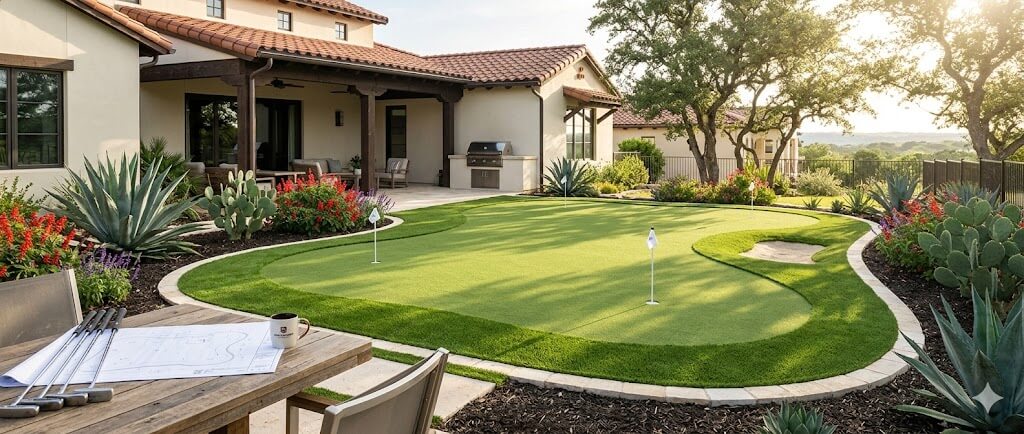
Stimp Rating and Pile Height Explained: Choosing the Right Artificial Grass Putting Green
Choosing an artificial grass putting green requires a clear understanding of the performance metrics that govern playability and service life. Two primary measures—stimp rating and pile height—directly influence ball behavior and turf durability. The stimp rating quantifies surface speed, while pile height affects roll quality and long-term resilience. This article examines these metrics and related factors to help you evaluate options and select turf that meets your performance, maintenance, and longevity objectives.
To choose the ideal artificial grass putting green in terms of performance and durability, focus on the following factors:
Several technical characteristics determine a putting green’s performance and lifespan: stimp rating, pile height, and fiber density. Understanding each parameter allows you to match turf selection to desired play characteristics and maintenance regimes.
Stimp Rating
The stimp rating measures how far a golf ball rolls on a putting surface and serves as a standardized indicator of green speed. It is obtained with a Stimpmeter that releases a ball from a calibrated ramp and records travel distance. Higher stimp values denote faster greens that demand greater putting precision, while lower values indicate slower, more forgiving surfaces.
Pile Height
Pile height refers to the length of the turf fibers and is a key determinant of ball behavior. Recommended pile heights for putting greens typically range from 0.5 to 1.5 inches. Shorter fibers favor quicker, more consistent roll and improved shot accuracy; taller fibers increase resistance, slowing the ball and reducing precision. Select pile height to align green speed with your intended level of difficulty.
Density
Density refers to fiber count per unit area and strongly affects surface uniformity and durability. High-density turfs provide a smoother, more consistent roll and greater resistance to wear in high-traffic zones. Increased stitch counts and tighter fiber spacing extend service life and maintain playability under repeated use.
What is the Stimp Rating and Why Does It Matter for Artificial Putting Greens?
The stimp rating provides a quantitative measure of green speed, allowing players and managers to set expectations for putting performance. Measured with a Stimpmeter, the rating helps objectively compare surfaces. Typical ranges cited for amateur play fall between 10 and 14, while professional greens commonly measure around 12 to 15. Small differences in stimp can materially affect shot selection and the required level of control.
How Does Stimp Rating Influence Putting Green Speed and Playability?
Stimp rating correlates directly with how quickly and smoothly the ball travels. Faster ratings reward precise putting but increase difficulty by demanding finer control; slower ratings are more forgiving. Environmental variables—humidity, fiber texture, and maintenance protocols—also alter effective stimp, so course managers must monitor and calibrate surfaces to maintain target performance.
For homeowners and facilities planning installations, selecting experienced professionals ensures stimp and other metrics are achieved. Many firms provide turnkey solutions for artificial grass putting greens, delivering consistent playability and long-term durability.
How Does Pile Height Affect Artificial Turf Performance on Putting Greens?
Pile height substantially affects both playability and user experience. A 0.5 to 1.5-inch range is generally optimal for replicating natural roll characteristics. Excessively short piles may produce an uneven feel and compromise ball contact, whereas overly tall piles increase friction and reduce speed. Select a height based on the desired green pace and the expected skill level of users.
How Does Pile Height Impact Ball Roll and Durability?
Shorter piles create a firmer, more consistent roll and support precision putting; taller piles dissipate ball momentum and can yield irregular roll patterns. From a durability perspective, shorter fibers are simpler to maintain and better resist abrasion from repeated play. Balancing pile height ensures both performance targets and longevity requirements are met.
What Materials Comprise the Best Artificial Grass for Golf Putting Greens?
Material selection influences feel, durability, and maintenance. High-quality putting turfs are commonly manufactured from polyethylene or polypropylene fibers chosen for UV stability and wear resistance. Premium constructions may combine specialized fiber profiles to mimic natural grass while preserving long-term performance and aesthetic value.
How Do Infill Materials Affect Turf Longevity and Performance?
Infill selection is integral to turf stability and thermal performance. Sand and rubber infills provide ballast to keep fibers upright and contribute cushioning underfoot, which improves roll consistency. Appropriate infill also moderates surface temperature and assists drainage, reducing the risk of overheating and water retention. Correct infill specification enhances both playability and service life.
What Is the Installation Process for Custom Artificial Putting Greens?
Installing a custom putting green follows a defined sequence of site works and material installation to achieve the designed performance standards.
- Site Preparation: Clearing the area and grading the surface to ensure proper drainage.
- Base Construction: Adding a stable foundation with a mix of crushed stone or gravel to improve drainage and provide support.
- Turf Layout: Carefully position the turf rolls over the prepared base, paying attention to seam alignment.
- Infill Application: Distributing infill material evenly across the surface for stability and comfort.
Adhering to these installation steps delivers a professional-grade putting green with consistent performance and extended service life.
What Maintenance Practices Maximize Putting Green Longevity and Performance?
Routine maintenance preserves playability and reduces lifecycle costs. Key tasks include brushing to restore fiber orientation, debris removal to prevent surface contamination, and scheduled infill replenishment to retain cushioning and support.
- Regular Cleaning: Brush the turf to remove debris and maintain fiber integrity.
- Infill Management: Replenish infill material as needed to maintain cushion and support.
- Inspection for Damage: Regular inspections help identify and address wear issues before they escalate.
Consistent application of these practices reduces repair frequency and maintains consistent green speed and appearance over time.
How to Choose the Right Artificial Putting Green Turf for Your Needs?
Selecting appropriate turf requires assessing intended use, expected traffic, and desired performance outcomes. Consider the functional requirements first, then evaluate materials and construction to meet those needs.
- Intended Use: Whether for casual play, serious practice, or commercial use, knowing the expected traffic will guide your choice.
- Performance Ratings: Consider stimp ratings and pile heights that align with your skill level and preferences.
- Material Quality: Invest in high-quality fibers that replicate the characteristics of natural grass.
Balancing intended use, performance metrics, and material quality will help you specify a turf that delivers the best combination of playability, durability, and return on investment.
What Are Industry Trends and Adoption Rates for Artificial Putting Greens in 2026?
As of 2023, market growth has been driven by material and manufacturing advances that improve realism and reduce maintenance. Demand is increasing for eco-conscious systems that minimize water use and lower lifecycle costs. These technology improvements are expanding adoption across residential and commercial sectors by delivering more authentic play and reducing operational requirements.
For detailed product information or project inquiries, please visit our Contact Us page. A full overview of available solutions and specifications is also available at Amazing Turf and Lawn.
Frequently Asked Questions
1. How important is the choice of infill material for artificial putting greens?
Infill selection significantly affects playability, thermal performance, and structural resilience. Properly specified sand or rubber infill stabilizes fibers, provides cushioning, supports drainage, and helps control surface temperature. The correct infill choice directly contributes to consistent ball roll and long-term turf integrity.
2. What factors should influence the placement of a putting green?
Site selection should prioritize drainage capacity and solar exposure to prevent moisture retention and ensure predictable surface behavior. Accessibility relative to existing landscaping and recreational areas will aid usability and maintenance. Finally, consider expected usage intensity when positioning the green to optimize service life and upkeep requirements.
3. Can artificial putting greens be customized for different skill levels?
Yes. Adjusting the stimp rating and pile height allows customization for varying skill levels. Slower stimp values with slightly taller pile heights benefit beginners by reducing ball speed, while lower pile heights and firmer surfaces suit advanced players seeking greater speed and precision.
4. How do climate and environmental factors affect the performance of artificial putting greens?
Climate variables such as temperature, humidity, and sun exposure alter turf firmness and surface speed. Hotter environments may require additional infill or reflective additives to manage surface temperature, while high-precipitation areas need engineered drainage to avoid waterlogging and variable roll characteristics.
5. What are the long-term maintenance needs for artificial putting greens?
Long-term care includes routine debris removal, brushing to maintain fiber alignment, periodic infill top-ups, and scheduled inspections to detect wear. Depending on use, occasional deep cleaning or localized turf replacement may be necessary. A documented maintenance schedule helps protect performance and reduces lifecycle costs.
6. Are there specific construction techniques that improve the longevity of artificial putting greens?
Yes. Proper site grading for effective drainage, construction of a stable aggregate base, and precise seam alignment during turf installation all reduce movement and premature wear. Using high-quality infill and adhering to installation tolerances further enhances resilience and extends service life.
7. How do advancements in technology affect the quality of fake putting greens?
Technological progress in fiber engineering, infill formulations, and installation methods has enhanced realism and reduced maintenance requirements. Modern fibers better mimic natural turf characteristics, while improved infill systems and installation standards deliver greater stability and more authentic ball behavior.
Conclusion
Choosing the correct artificial putting green balances playability, durability, and maintenance cost. Understanding stimp ratings, pile heights, and density enables informed specification to meet your performance targets. With quality materials and proper installation, a synthetic green can deliver a consistent feel, reduced water use, and a favorable return on investment over many years. Explore our professional-grade turf options to identify the solution that best fits your needs.